FEDERAL PUBLIC SERVICE COMMISSION
COMPETITIVE EXAMINATION-2021
GENDER STUDIES
|
TIME
ALLOWED: THREE HOURS PART-I(MCQS): MAXIMUM 30 MINUTES
|
PART-I (MCQS) MAXIMUM MARKS = 20 PART-II MAXIMUM MARKS
= 80
|
|
NOTE: (i) Part-II
is to be attempted on the separate Answer Book.
(ii)
Attempt ONLY FOUR questions from PART-II. ALL questions carry EQUAL marks.
(iii)
All the parts (if
any) of each
Question must be attempted at one place
instead of at
different places.
(iv)
Write Q. No. in the Answer Book in accordance with Q.
No. in the Q.Paper.
(v)
No Page/Space be left blank between the answers. All the blank pages of Answer Book
must be crossed.
(vi)
Extra attempt of any question or any part of the question will not be considered.
|
PART-I1
Q. No.
2. Discuss in detail what the autonomy
and integration debate in gender
studies have important
contributions to the development of the field of knowledge. (20)
A. The autonomy and
integration debate in gender studies is a debate on whether gender studies
should be an independent and separate field of study, or whether it should be
integrated and incorporated into other disciplines and subjects. The debate has
been ongoing since the 1980s and has implications for the development of the
field of knowledge.
Some of the arguments for the autonomy of gender studies are:
- Autonomy
allows gender studies to maintain its critical and feminist perspective,
and to challenge and transform the dominant and patriarchal paradigms and
structures of knowledge production.
- Autonomy
enables gender studies to generate new and innovative knowledge, through
the interaction and collaboration of scholars who share a common vision
and mission.
- Autonomy
protects gender studies from the pressures and constraints of mainstream academia, which may marginalize, dilute, or co-opt its agenda
and achievements.
Some of the arguments for the integration of gender studies are:
- Integration
allows gender studies to reach and influence a wider and more diverse
audience, and to disseminate and apply its knowledge to various fields and
sectors of society.
- Integration
enables gender studies to benefit from the resources and opportunities of
other disciplines and subjects and to enrich and enhance its methods and
theories.
- Integration
fosters gender studies to engage and cooperate with other actors and
stakeholders, and to create dialogue and synergy for social change and
justice.
Summary:
- The
autonomy and integration debate in gender studies is a debate on whether
gender studies should be an independent and separate field of study, or
whether it should be integrated and incorporated into other disciplines
and subjects.
- The
debate has pros and cons for both sides and has implications for the
development of the field of knowledge.
- The
debate reflects the diversity and dynamism of gender studies and the
challenges and opportunities it faces in the academic and social context.
Q. No. 3. Masculinity and
femininity have the deeply engraved realities since the distant past in human history. Discuss
various theoretical debates
on the construction of masculinity
and femininity to make it explicit
that the formation of both is either natural or social reality.
Support your arguments
with real-life examples. (20)
A. Masculinity and femininity are the concepts and practices that
define and differentiate men and women in a given society. There are various
theoretical debates on whether masculinity and femininity are natural or social
realities, that is, whether they are determined by biological factors or by
cultural factors. Here are some of the main perspectives on this debate:
- Essentialism:
This perspective argues that masculinity and femininity are natural
realities, that is, they are based on the innate and immutable
characteristics of men and women, such as their hormones, genes, and brain
structures. Essentialism claims that there are universal and fixed traits
that distinguish men and women, such as aggression, rationality, and
competitiveness for men, and nurturance, emotionality, and cooperation for
women. Essentialism supports the idea that gender roles and relations are
natural and inevitable and that any deviation from them is abnormal or
unnatural. An example of essentialism is the evolutionary psychology
approach, which explains gender differences in terms of the adaptation and
survival of the human species1.
- Social
constructionism: This perspective argues that masculinity and femininity
are social realities, that is, they are based on the historical and
cultural contexts and processes that shape and change the meanings and
practices of gender. Social constructionism claims that there are no
inherent or fixed traits that define men and women, but rather that gender
is a dynamic and fluid phenomenon that is influenced by various factors,
such as class, race, ethnicity, religion, age, and sexuality. Social
constructionism supports the idea that gender roles and relations are
socially constructed and contested and that any variation from them is
possible and legitimate. An example of social constructionism is the feminist
approach, which challenges and transforms the patriarchal and sexist norms
and values that subordinate and oppress women2.
- Interactionism:
This perspective argues that masculinity and femininity are both natural
and social realities, that is, they are based on the interplay of
biological and cultural factors that influence and shape the individual
and collective experiences and expressions of gender. Interactionism
claims that there are some biological and psychological differences
between men and women, but that these differences are not fixed or
deterministic, but rather that they are modified and mediated by the
social and situational contexts and interactions. Interactionism supports
the idea that gender roles and relations are not static or homogeneous,
but rather that they are flexible and diverse, and that they depend on the
agency and negotiation of the actors involved. An example of interactionism is the symbolic
interactionism approach, which analyzes how gender identities and
performances are created and maintained through the use of symbols,
language, and communication3.
Summary:
- Masculinity
and femininity are the concepts and practices that define and
differentiate men and women in a given society.
- There
are various theoretical debates on whether masculinity and femininity are
natural or social realities, that is, whether they are determined by
biological factors or by cultural factors.
- Some
of the main perspectives on this debate are essentialism, social
constructionism, and interactionism, which have different assumptions and
implications for the understanding and explanation of gender differences
and similarities.
Q. No. 4. Marxist feminism is a philosophical variant of feminism
that incorporates and extends
Marxist theory and analyzes
the ways in which women are exploited through
capitalism and the individual
ownership of private property. Discuss the development of Marxist/Socialist feminism and the philosophical
stance they hold to discuss
gender issues and exploitation.(20)
A. Marxist feminism is a branch of feminist theory that applies the
Marxist critique of capitalism to the analysis of gender oppression and
exploitation. Marxist feminism argues that the main cause of women’s
subordination and suffering is the capitalist system, which exploits women’s
labor, both paid and unpaid, and reproduces patriarchal and sexist ideologies and
practices. Marxist feminism also proposes that the liberation of women can only
be achieved by overthrowing the capitalist system and creating a socialist
society, where women and men are equal in all aspects of life.
The development of Marxist/Socialist feminism can be traced back
to the 19th and early 20th centuries, when some of the early socialist and
communist thinkers and activists, such as Friedrich Engels, Clara Zetkin, Rosa
Luxemburg, and Alexandra Kollontai, addressed the question of women’s oppression
and emancipation to the class struggle and the socialist
revolution. They argued that women’s oppression was not a natural or eternal
condition, but a historical and social phenomenon, that was linked to the
emergence and development of private property, class society, and capitalism.
They also argued that women’s emancipation was not a separate or secondary
issue, but an integral and essential part of the socialist movement and the
proletarian revolution. They advocated for the abolition of the patriarchal
family, the socialization of domestic labor, the expansion of women’s rights
and opportunities, and the participation of women in the political and economic
spheres.
However, Marxist/Socialist feminism did not become a distinct and
influential branch of feminist theory until the 1960s and 1970s, when a new
wave of feminist movements and scholars emerged, inspired and influenced by the
civil rights, anti-war, and anti-colonial struggles, as well as by the revival
and revision of Marxist theory and practice. These feminist movements and
scholars criticized mainstream liberal feminism, which they considered to
be reformist, individualist, and bourgeois, and orthodox Marxism, which
they considered to be economistic, deterministic, and androcentric. They
developed a more complex and nuanced analysis of the interrelation and
intersection of gender, class, race, and other forms of oppression and
domination, and the dialectical and historical nature of women’s oppression and
resistance. They also explored a variety of topics and issues, such as the
sexual division of labor, the value of domestic labor, the reproduction of
labor power, the sexual politics of work, the state, the family, and the
culture, the global and racial dimensions of women’s exploitation, and the
strategies and forms of women’s liberation and solidarity.
Some of the prominent and influential Marxist/Socialist feminist
thinkers and activists of this period include Simone de Beauvoir, Juliet
Mitchell, Sheila Rowbotham, Mariarosa Dalla Costa, Selma James, Heidi Hartmann,
Zillah Eisenstein, Angela Davis, Bell Hooks, and Nancy Fraser. They contributed
to the development and diversification of Marxist/Socialist feminism, as well
as to the dialogue and debate with other branches and currents of feminist
theory, such as radical feminism, psychoanalytic feminism, postmodern feminism,
and ecofeminism.
Summary:
- Marxist
feminism is a branch of feminist theory that applies the Marxist critique
of capitalism to the analysis of gender oppression and exploitation.
- Marxist
feminism argues that the main cause of women’s subordination and suffering
is the capitalist system, which exploits women’s labor, both paid and
unpaid, and reproduces patriarchal and sexist ideologies and practices.
- Marxist
feminism also proposes that the liberation of women can only be achieved
by overthrowing the capitalist system and creating a socialist society,
where women and men are equal in all aspects of life.
- The
development of Marxist/Socialist feminism can be traced back to the 19th
and early 20th centuries when some of the early socialist and communist
thinkers and activists addressed the question of women’s oppression and
emancipation in relation to the class struggle and the socialist
revolution.
- The
development of Marxist/Socialist feminism also continued in the 1960s and
1970s, when a new wave of feminist movements and scholars emerged,
inspired and influenced by the civil rights, anti-war, and anti-colonial
struggles, as well as by the revival and revision of Marxist theory and
practice.
- The
development of Marxist/Socialist feminism also involved a more complex and
nuanced analysis of the interrelation and intersection of gender, class,
race, and other forms of oppression and domination, and the dialectical
and historical nature of women’s oppression and resistance.
- The
development of Marxist/Socialist feminism also involved a variety of
topics and issues, such as the sexual division of labor, the value of
domestic labor, the reproduction of labor power, the sexual politics of
work, the state, the family, and the culture, the global and racial
dimensions of women’s exploitation, and the strategies and forms of
women’s liberation and solidarity.
Q. No. 5. Psychoanalytic feminism is a theory of oppression, which asserts that men have an inherent psychological need to subjugate
women. As elaborated, give a detailed
analysis of the gender oppression and women’s subordination promulgated by Psychoanalytic Feminism. (20)
A. Psychoanalytic feminism is a branch of feminist theory that
applies the insights and methods of psychoanalysis to the analysis of gender
oppression and women’s subordination. Psychoanalytic feminism argues that men
have an inherent psychological need to subjugate women, because of their
unresolved childhood conflicts and unconscious desires, which are shaped by the
patriarchal and sexist culture and society. Psychoanalytic feminism also
explores the ways that women internalize and resist their oppression, and the
possibilities of their liberation and empowerment.
According to psychoanalytic feminism, men’s need to subjugate
women stems from their experience of the Oedipus complex, which is a stage of
psychosexual development in which the male child develops a sexual attraction
to his mother and a rivalry with his father. The male child fears that his
father will castrate him as a punishment for his incestuous desire, and thus
represses his feelings and identifies with his father. However, this
identification is never complete or secure, and the male child remains haunted
by the threat of castration and the loss of his mother. To cope with this
anxiety, the male child projects his fear and hatred onto women, whom he
perceives as castrated and inferior, and seeks to dominate and control them,
either through violence or through love. The male child also develops a
narcissistic and phallocentric ego, which values his own masculinity and power
over everything else, and denies his dependence and vulnerability.
According to psychoanalytic feminism, women’s subordination to men
stems from their experience of the Electra complex, which is a stage of
psychosexual development in which the female child develops a sexual attraction
to her father and a rivalry with her mother. The female child realizes that she
lacks a penis, and thus feels inferior and envious of her father. She also
blames her mother for her castration and resents her for her lack of power and
authority. The female child desires to have a penis, either literally or
symbolically, and thus represses her feelings and identifies with her father.
However, this identification is also never complete or secure, and the female
child remains dissatisfied and frustrated by her lack of a penis and her
dependence on men. To cope with this discontent, the female child internalizes
the patriarchal and sexist norms and values, which define her as passive,
submissive, and nurturing, and seeks to please and serve men, either through
motherhood or through sexuality. The female child also develops a masochistic
and dependent ego, which devalues her own femininity and autonomy and accepts
her oppression and exploitation.
Psychoanalytic feminism also examines the ways that women resist
and challenge their oppression and the possibilities of their liberation and
empowerment. Some of the strategies and solutions proposed by psychoanalytic
feminists are:
- Revising
and reinterpreting the psychoanalytic theory and practice, to make it more
inclusive, diverse, and feminist, and to expose and critique the
patriarchal and sexist biases and assumptions of classical
psychoanalysis.
- Exploring
and affirming female sexuality and subjectivity, reclaiming and
celebrating the female body, desire, and pleasure, and resisting and subverting
the male domination and objectification of women.
- Developing
and fostering female solidarity and agency, creating and supporting female networks, communities, and movements, and empowering and mobilizing
women to act and speak for themselves and for others.
- Transforming
and transcending the gender roles and relations, to challenge and change
the patriarchal and sexist culture and society, and creating a more
egalitarian and democratic world, where women and men are equal and free.
Summary:
- Psychoanalytic
feminism is a branch of feminist theory that applies the insights and
methods of psychoanalysis to the analysis of gender oppression and women’s
subordination.
- Psychoanalytic
feminism argues that men have an inherent psychological need to subjugate
women, because of their unresolved childhood conflicts and unconscious
desires, which are shaped by the patriarchal and sexist culture and
society.
- Psychoanalytic
feminism also explores the ways that women internalize and resist their
oppression, and the possibilities of their liberation and empowerment.
- Psychoanalytic
feminism proposes some strategies and solutions, such as revising and
reinterpreting the psychoanalytic theory and practice, exploring and
affirming female sexuality and subjectivity, developing and fostering female solidarity and agency, and transforming and transcending gender roles and relations.
Q. No.
6. Modernization Theory blames internal cultural factors for women’s subordination in the developing world. Discuss and elaborate on the given statement with respect
to Modernization Perspectives. (20)
A. Modernization Theory is a perspective that explains the process of
social and economic development in terms of the transition from traditional to
modern societies. Modernization Theory assumes that modern societies are more
advanced, rational, and progressive than traditional societies and that the
latter should follow the path of the former to achieve development. Modernization Theory also assumes that there is a universal
and linear model of development, based on the Western experience, that can be
applied to all societies1.
Modernization Theory blames internal cultural factors for women’s
subordination in the developing world because it considers traditional
cultures to be the main obstacle to development and modernization.
Modernization Theory argues that traditional cultures are characterized by
irrationality, superstition, fatalism, collectivism, and patriarchy, which
hinder the growth of productivity, innovation, democracy, and individualism. Modernization Theory also argues that traditional cultures
assign rigid and unequal gender roles and norms, which confine women to the
domestic sphere, limit their education and employment opportunities, and
subject them to male domination and violence2.
Modernization Theory suggests that the solution to women’s
subordination in the developing world is to adopt the modern culture and values
of the West, which are assumed to be more conducive to development and gender
equality. Modernization Theory proposes that the processes of urbanization,
industrialization, secularization, and democratization will bring about social
and cultural changes that will improve the status and role of women in the
developing world. Modernization Theory expects that these changes will include
the expansion of women’s rights and freedoms, the increase of women’s
participation and representation in the public sphere, the reduction of women’s
fertility and dependency, and the emergence of a nuclear and egalitarian family
structure3.
Summary:
- Modernization
Theory is a perspective that explains the process of social and economic
development in terms of the transition from traditional to modern
societies, based on the Western model.
- Modernization
Theory blames internal cultural factors for women’s subordination in the
developing world, because it considers traditional cultures to be the main
obstacle to development and modernization, and to assign rigid and unequal
gender roles and norms to women.
- Modernization
Theory suggests that the solution to women’s subordination in the
developing world is to adopt the modern culture and values of the West,
which are assumed to be more conducive to development and gender equality and to undergo the processes of urbanization, industrialization,
secularization, and democratization.
Q. No.
7. Critically analyze the various approaches to women’s
development focusing on Women in
Development (WID), Women and Development (WAD), and Gender and Development (GAD).
A. Women’s development is a term that refers to the improvement of
the status, role, and well-being of women in society, especially in
relation to men. There are various approaches to women’s development, which
have different assumptions, goals, and strategies. Three of the most prominent
approaches are Women in Development (WID), Women and Development (WAD), and
Gender and Development (GAD).
- Women
in Development (WID): This approach emerged in the early 1970s, influenced
by the liberal feminist movement and modernization theory. WID argues
that women are excluded or marginalized from the development process and
that their inclusion and integration are necessary for achieving economic
growth and social progress. WID aims to increase women’s access and
opportunities in education, employment, health, and political
participation, and to reduce the gender gap in these areas. WID adopts a reformist and additive strategy, which
means that it seeks to improve the existing system and policies, and to
add women to the development agenda, without challenging the underlying
structures and causes of gender inequality12.
- Women
and Development (WAD): This approach emerged in the late 1970s, influenced
by the Marxist feminist movement and the dependency theory. WAD argues
that women are exploited and oppressed by the capitalist and patriarchal
system and that their subordination is linked to the underdevelopment and
dependency of the Third World. WAD aims to expose and challenge the
structural and systemic factors that generate and maintain women’s poverty
and marginalization, and to promote women’s collective and alternative
forms of development, such as cooperatives, grassroots organizations, and
self-reliance. WAD adopts a radical and transformative strategy, which
means that it seeks to change the existing system and policies, and to
create a new development paradigm, based on the principles of equality,
justice, and liberation3 .
- Gender
and Development (GAD): This approach emerged in the mid-1980s, influenced
by the socialist feminist movement and the post-structuralism theory. GAD
argues that gender is a social construct that shapes and is shaped by the
development process and that gender relations are dynamic and
context-specific. GAD aims to analyze and address the gender issues and
needs that arise in different development contexts and sectors, and to
empower women and men to participate and benefit equally from the
development outcomes. GAD adopts a holistic and strategic strategy, which
means that it seeks to integrate gender analysis and mainstreaming into
all aspects and levels of development planning and implementation and to
achieve gender equality and transformation as the ultimate goal of development.
Summary:
- Women’s
development is a term that refers to the improvement of the status, role,
and well-being of women in society, especially in relation to men.
- There
are various approaches to women’s development, which have different
assumptions, goals, and strategies.
- Three
of the most prominent approaches are Women in Development (WID), Women and
Development (WAD), and Gender and Development (GAD).
- WID
focuses on the inclusion and integration of women into the development
process and adopts a reformist and additive strategy.
- WAD
focuses on the exploitation and oppression of women by the capitalist and
patriarchal system and adopts a radical and transformative strategy.
- GAD
focuses on the social construction and dynamics of gender relations in the
development process and adopts a holistic and strategic strategy.
Q. No. 8. Despite the entry of women legislators into politics
on a 17 percent quota in national and provincial assemblies, still there are voices that “Is Pakistan’s Gender Quota in Parliament showing results?” Rethink and discuss how quotas can lead to the political mainstreaming of women in Pakistan. (20)
A. The question of whether
Pakistan’s gender quota in parliament is showing results is a complex and
contested one that depends on how one defines and measures the impact and
effectiveness of quotas. Quotas are affirmative action measures that aim to
increase the representation and participation of women in politics, by
reserving a certain percentage or number of seats for them in the legislative
bodies. Pakistan has adopted a 17 percent quota for women in the
national and provincial assemblies since 2002, which has resulted in the
increase of women legislators from 2 percent to 21 percent in the National
Assembly, and from 1 percent to 18 percent in the provincial assemblies1.
Quotas can lead to political mainstreaming of women in Pakistan,
by creating and enhancing the opportunities and capacities of women to
influence and shape the political agenda and outcomes, and to promote and
protect the rights and interests of women and other marginalized groups in the
society. Quotas can also lead to political mainstreaming of women in Pakistan,
by challenging and changing the patriarchal and sexist norms and values that
exclude and discriminate against women in politics, and by fostering and
facilitating gender equality and empowerment in the political sphere.
However, quotas alone are not sufficient or guarantee for
political mainstreaming of women in Pakistan, as there are various challenges
and constraints that limit and undermine the potential and performance of women
legislators, such as:
- The selection and nomination process of women
candidates, which is often controlled and manipulated by the
male-dominated political parties and leaders, and which may result in the
selection of women who are loyal, dependent, or related to the male
politicians, rather than women who are qualified, independent, or representative
of the women’s movement2.
- The political and institutional environment of the
parliament, which is often hostile and unfriendly to women legislators,
and which may subject them to harassment, intimidation, or marginalization
by their male colleagues, as well as to the lack of resources, support, or
recognition by the parliamentary staff, committees, or media3.
- The
social and cultural expectations and pressures of the society, which are
often conservative and traditional towards women’s role and status, and
which may impose or reinforce the stereotypes, prejudices, or biases
against women in politics, as well as the multiple and conflicting demands
and responsibilities of women as legislators, wives, mothers, and
daughters.
Therefore, quotas are necessary but not sufficient for political
mainstreaming of women in Pakistan, and they need to be complemented and
supported by other measures and strategies, such as:
- Reforming
and strengthening the political parties and electoral system, to ensure
the fair and transparent selection and nomination of women candidates, and
to provide them with adequate training, funding, and campaigning
assistance.
- Improving
and empowering the parliamentary procedures and practices, to ensure the
equal and effective participation and representation of women legislators,
and to provide them with sufficient resources, support, and recognition.
- Raising
and sensitizing public awareness and opinion, to ensure a positive
and respectful attitude and behavior towards women in politics, and to
reduce the stereotypes, prejudices, or biases against them.
Summary:
- The
question of whether Pakistan’s gender quota in parliament is showing
results is a complex and contested one, that depends on how one defines
and measures the impact and effectiveness of quotas.
- Quotas
are affirmative action measures that aim to increase the representation
and participation of women in politics, by reserving a certain percentage
or number of seats for them in the legislative bodies.
- Quotas
can lead to political mainstreaming of women in Pakistan, by creating and
enhancing the opportunities and capacities of women to influence and shape
the political agenda and outcomes, and by challenging and changing the
patriarchal and sexist norms and values that exclude and discriminate
against women in politics.
- However,
quotas alone are not sufficient or guarantee for political mainstreaming
of women in Pakistan, as there are various challenges and constraints that
limit and undermine the potential and performance of women legislators,
such as the selection and nomination process, the political and
institutional environment, and the social and cultural expectations and
pressures.
- Therefore,
quotas need to be complemented and supported by other measures and
strategies, such as reforming and strengthening the political parties and
electoral system, improving and empowering the parliamentary procedures
and practices, and raising and sensitizing public awareness and
opinion.
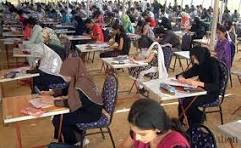 CSS Examination[/caption]


